Understanding the Dunning-Kruger Effect: A Clear Guide
The Dunning-Kruger Effect is when people with low skill in a certain area overestimate their ability, because they lack the awareness to see their own gaps. This guide explains what it is and how to recognize and address it.
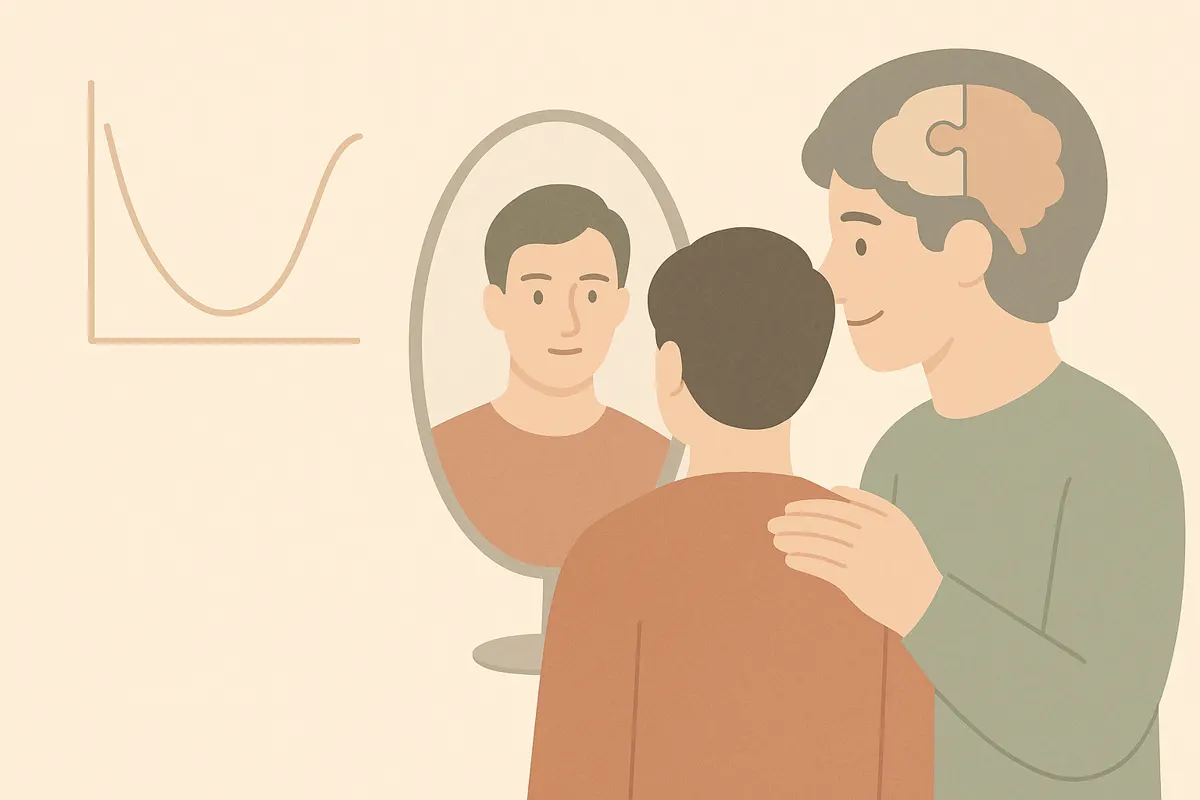
What Is the Dunning-Kruger Effect?
The Dunning-Kruger Effect is a psychological phenomenon where people with limited knowledge or skill in a specific area tend to overestimate their competence. This happens because the same lack of expertise that leads to mistakes also makes it difficult to recognize their own errors.
Why Does It Happen?
- Lack of skill blocks self-awareness: If you don't know enough about a topic, it's hard to judge your own performance accurately.
- Mistaking confidence for competence: People often feel more confident than is justified, especially at the early stages of learning.
- Few opportunities for feedback: Without honest input from others, it is easy to hold onto mistaken beliefs about your abilities.
How to Recognize It in Yourself
- Notice if you feel unusually confident in an area, especially if you have little experience.
- Compare your self-assessment with objective results or the opinions of knowledgeable others.
- Look for patterns where you are surprised by negative feedback or outcomes.
Practical Ways to Overcome the Effect
- Seek honest feedback: Ask friends, colleagues, or mentors for their genuine perspective on your skills. Tools like Blindspot can help by letting your friends give anonymous feedback, highlighting the gap between self-view and how others see you.
- Compare with reality: Test your abilities with real-world challenges or assessments.
- Keep learning: As you gain expertise, your self-assessment becomes more accurate.
- Stay open-minded: Accept that everyone has blind spots and that noticing them is a sign of growth, not failure.
Curious about your own blind spots? Blindspot shows you how your friends really see you - take the quiz and share it for anonymous feedback.
Try BlindspotFAQ
What is the Dunning-Kruger Effect in simple terms?
It's when people with low skill in something overestimate how good they are, because they can't see their own mistakes.
How can I tell if I have a Dunning-Kruger blind spot?
If you feel very confident in an area where you have little experience, or if feedback from others surprises you, you might be affected.
What helps reduce the Dunning-Kruger Effect?
Getting honest feedback, comparing your beliefs with real results, and continuing to learn all help reduce this bias.
How does Blindspot help with self-awareness?
Blindspot lets your friends answer questions about you anonymously, showing the gap between how you see yourself and how others actually see you.
Is high confidence always a sign of the Dunning-Kruger Effect?
Not always. Confidence can come from real skill, but if it isn't matched by knowledge or feedback, it may signal a blind spot.