The Johari Window Explained: Understanding Self-Awareness
The Johari Window is a psychological model that helps you understand how you see yourself versus how others see you, using four key areas of self-awareness.
What Is the Johari Window?
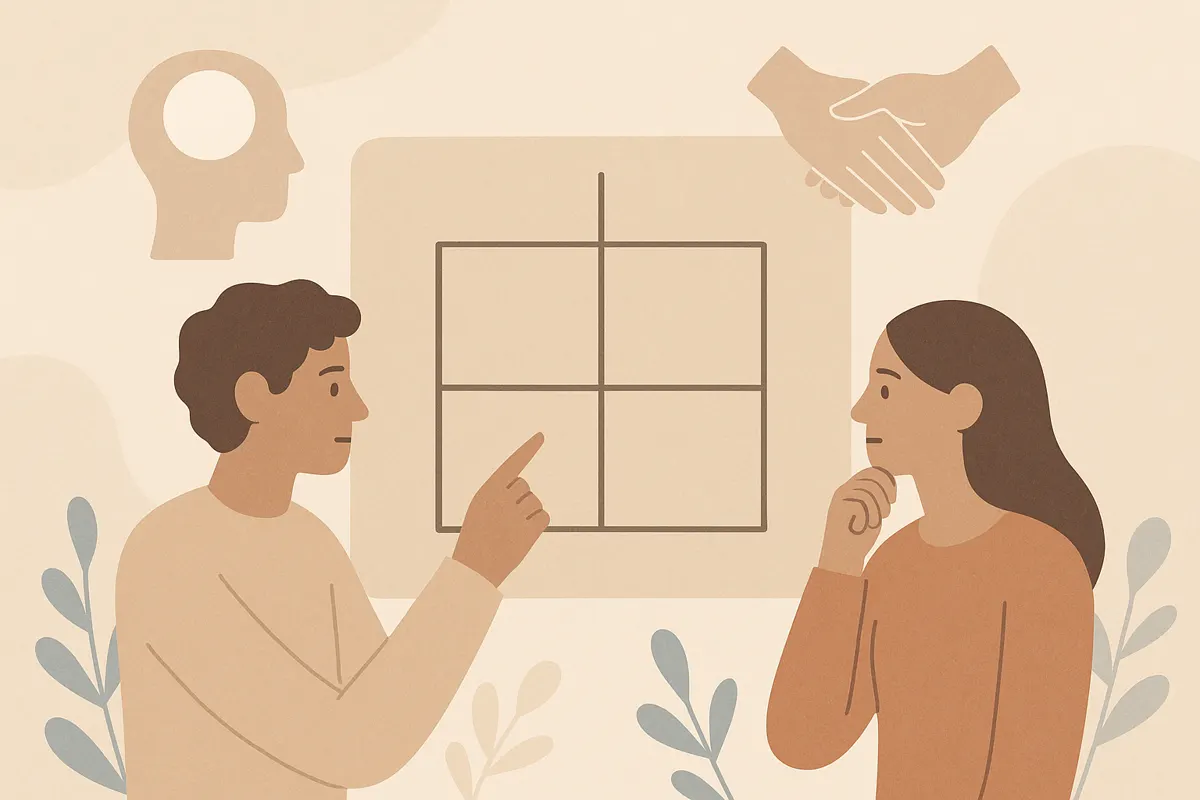
Developed by psychologists Joseph Luft and Harrington Ingham in 1955, the Johari Window is a simple framework for understanding self-perception and interpersonal relationships. It divides self-awareness into four quadrants: Open, Blind, Hidden, and Unknown.
The Four Quadrants Explained
- Open Area: Traits or feelings known to both you and others. This is the shared, public part of your personality.
- Blind Area: Qualities that others notice about you, but you are unaware of. These are your "blind spots."
- Hidden Area: Aspects you know about yourself but choose not to reveal to others.
- Unknown Area: Traits or patterns that neither you nor others are aware of - often subconscious or yet to be discovered.
Why the Johari Window Matters
The model helps improve self-awareness, communication, and relationships. By understanding your Open and Blind areas, you can work towards more authentic connections and personal growth.
How to Use the Johari Window Yourself
- Seek honest feedback: To reduce your Blind area, invite friends or colleagues to share their perceptions of you. This reveals blind spots you might not notice.
- Practice self-disclosure: Sharing your thoughts and feelings with others reduces your Hidden area, building trust and openness.
- Reflect regularly: Self-reflection and feedback over time can shift traits from Unknown to Open, fostering deeper understanding.
- Try anonymous feedback tools: Apps like Blindspot let you invite friends to give anonymous insights, so you can directly compare your self-view with how others see you - mirroring the Johari Window process.
Curious about your own blind spots? Blindspot shows you how your friends really see you - take the quiz and share it for anonymous feedback.
Try BlindspotFAQ
What are the four areas of the Johari Window?
Open (known to you and others), Blind (known to others, not you), Hidden (known to you, not others), and Unknown (known to neither).
How can I discover my blind spots?
Ask for honest feedback from friends or use anonymous feedback tools to learn how others perceive you.
Why is feedback important in the Johari Window model?
Feedback shrinks your Blind area, helping you become aware of traits or behaviors you might not notice on your own.
How does self-disclosure help with self-awareness?
Sharing your thoughts or feelings with others reduces your Hidden area and builds mutual understanding.
Can I use the Johari Window with my friends?
Yes. You can ask friends for feedback directly or use apps like Blindspot to gather anonymous insights and compare perceptions.